
The 'Go-To' Clinic Mentorship
EXCLUSIVELY For Solo Private Practice Owners
Build Your £100k Clinic Without Ever Feeling Salesy.
The ONLY clinic growth programme that installs BOTH the clinical AND the business systems you need to grow your private practice from the treatment room out. Without any silly sales tactics.
Powered by the Go-To Clinical Operating System™Clinical System
Business System
Ethical Growth Engine
Becoming An Accidental Business Owner
I’ve Worked With England Rugby, Munster, and Leeds Rhinos… But Nothing Prepared Me for Growing a Private Practice
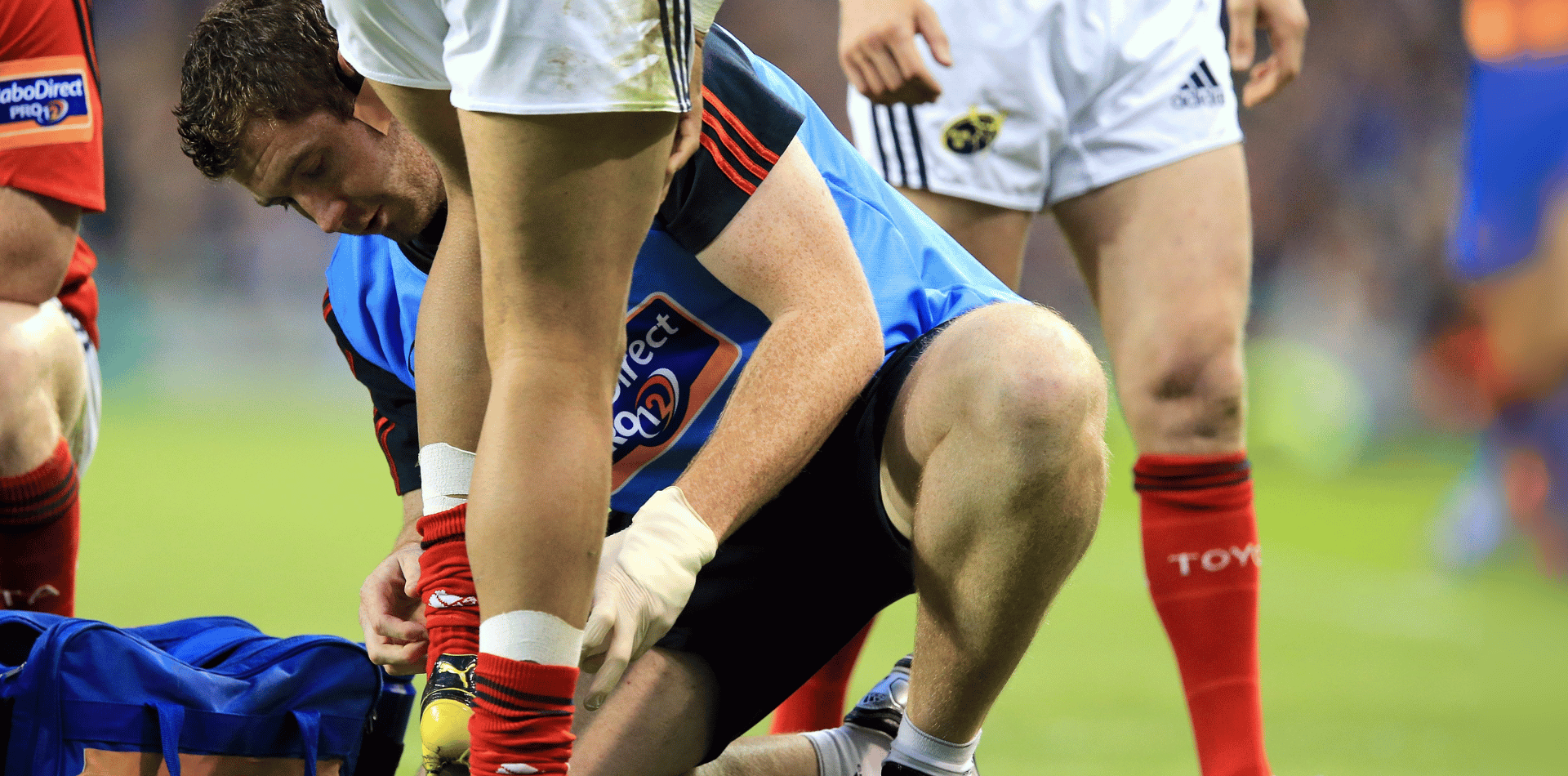
When I moved into private practice, I thought I was ready.
I’d spent years working with elite athletes. International rugby players. Guys who were the best in the world at what they did.
I’d helped them through surgeries, career-threatening injuries, and the pressure of performing under the spotlight every single week.
So when I opened my clinic, I figured: if I can handle that, private practice will be straightforward.
I was wrong.
In sport, athletes show up. They’re motivated. They follow the plan because the coaching staff and the culture demand it.
Sessions are scheduled into training blocks. The environment does half the work for you.
Private practice is a completely different game.
And nobody warned me.
The inconsistent diary
Some weeks the diary's full. Some weeks it's full of gaps.

30one week
18the next
26the week after
40never quite
I needed the clinic to generate £100,000 in its first year to replace my pro sport salary.
I’d done the mental maths. In my head, that meant roughly forty patient appointments a week.
That was the target.
But knowing what I needed to earn and knowing how to build a clinic that could earn it were two very different things.
I was never quite able to hit forty patients a week consistently.
The gaps in the diary meant that never ending uncertainty ate at my confidence to grow and hire more therapists.
I couldn't plan on an inconsistent diary with gaps each week. I definitely couldn't hire on one.
So I did the thing every physio hates. I started marketing.
Another post. Another offer. Another push to get my name out there.
I even spent £2,000 on a flyer in Sainsbury's.
And if I'm honest, it felt wrong deep inside.
Because I knew some patients dropped off after a few sessions. They hadn't got the result they came in for. And here I was, shouting louder to fill the gaps they left.
That internal conflict ate away at me. I found myself shying away from the marketing more and more.
I'd trained for years to get people better. Now I was trying to work out how to become a marketer and a business owner as well.
This was not enjoyable NOR sustainable.
And I knew something had to change fast.
The leaky bucket in every private practice
I sat down in a coffee shop, looked at the numbers, and finally saw the most simple and direct path to a £100K Clinic
I needed to understand why I couldn’t get to forty appointments a week consistently, despite everything I was doing to bring patients in.
So I looked at both sides of the diary. How many new patients were coming in, and how many appointments they actually attended.
I was averaging around six new patients a week.
But some patients were only staying for two or three sessions, instead of the five or six they needed to get the outcome they’d come in for.
The pain eased. They thought they were done. And I was back trying to find another new patient to fill the space they’d left.
When I looked at it on paper, I could see what I’d been missing.
If I could keep those patients progressing through the care they needed, I could build a sustainable £100k clinic from the patients already coming through the door.
Same Clinic. Around 6 New Patients Per Week. £44,100 or £100,800.
Here’s an illustration of that gap. Take a clinic seeing 315 new patients over a year. That’s around six initial assessments a week, at £50 a session.
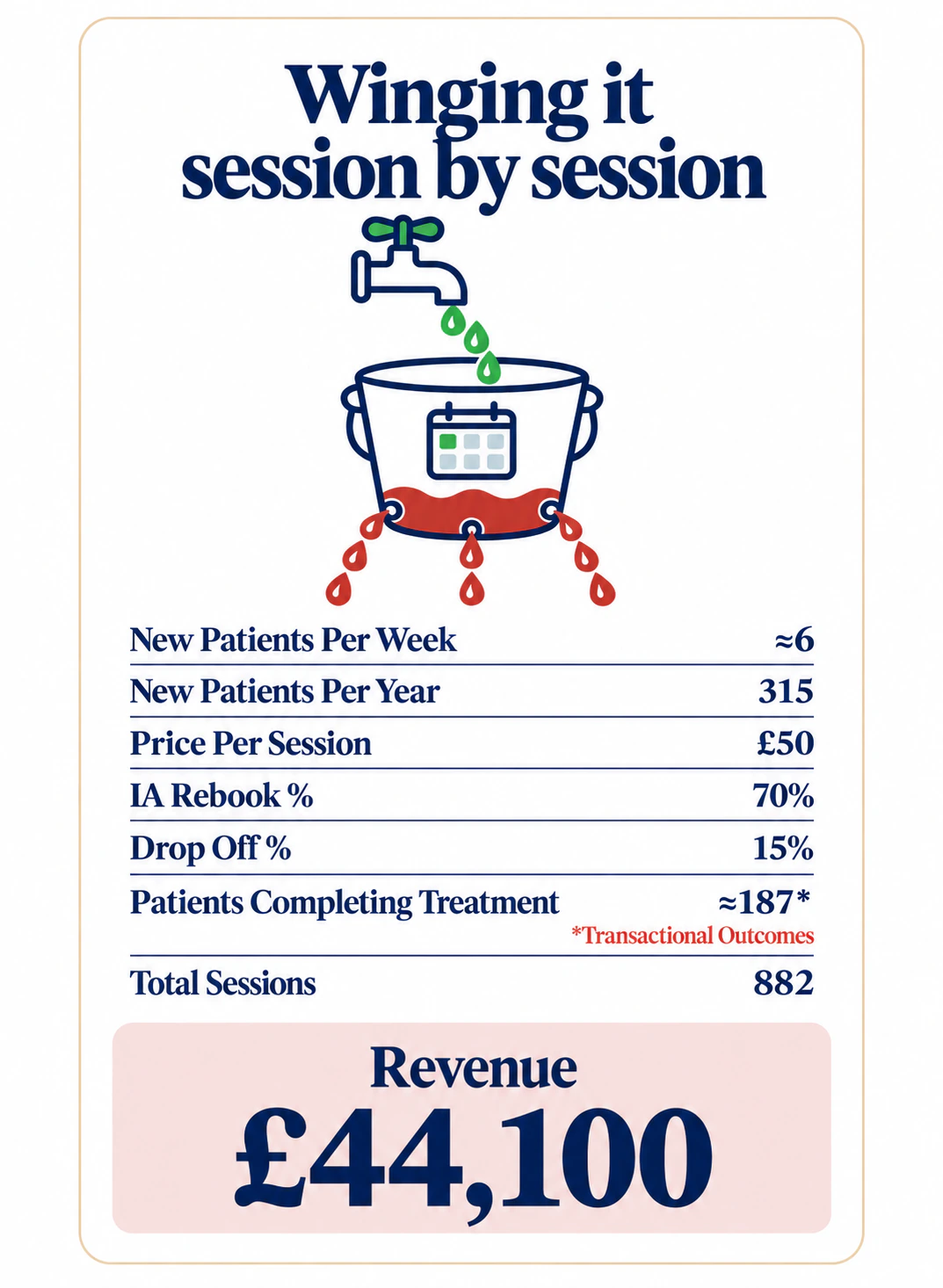
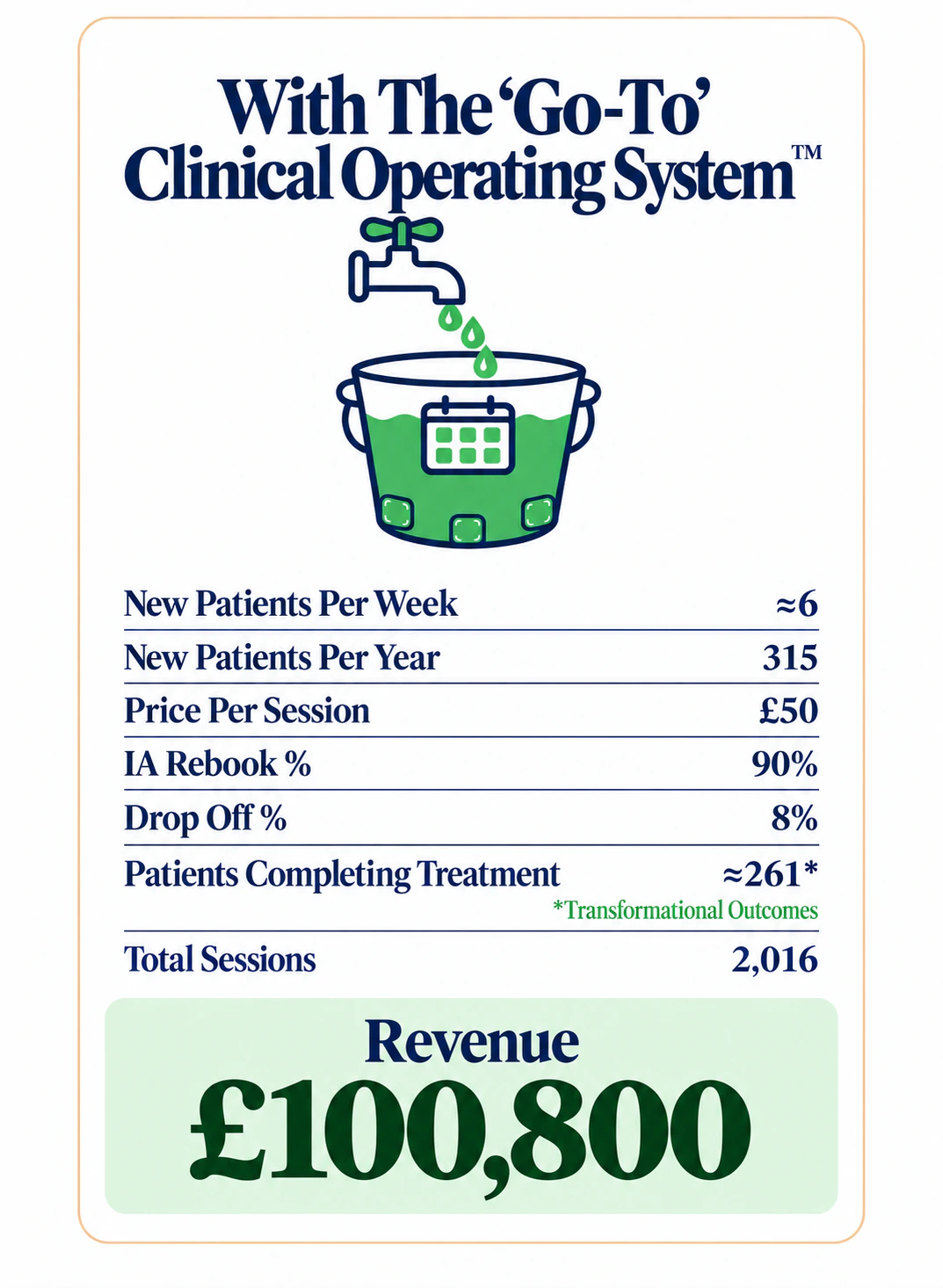
Same patients. Same room. Same physio.
In this example, that’s 1,134 more visits over the year. More patients following through on the care they need, instead of dropping off before they get the result they came for.
On paper, I could see a path to the £100,000 I needed. But it depended on patients following through on the care they’d come in for.
Why was that happening so naturally in pro sport, yet breaking down in my clinic?
So I went back to what I was doing in pro sport.
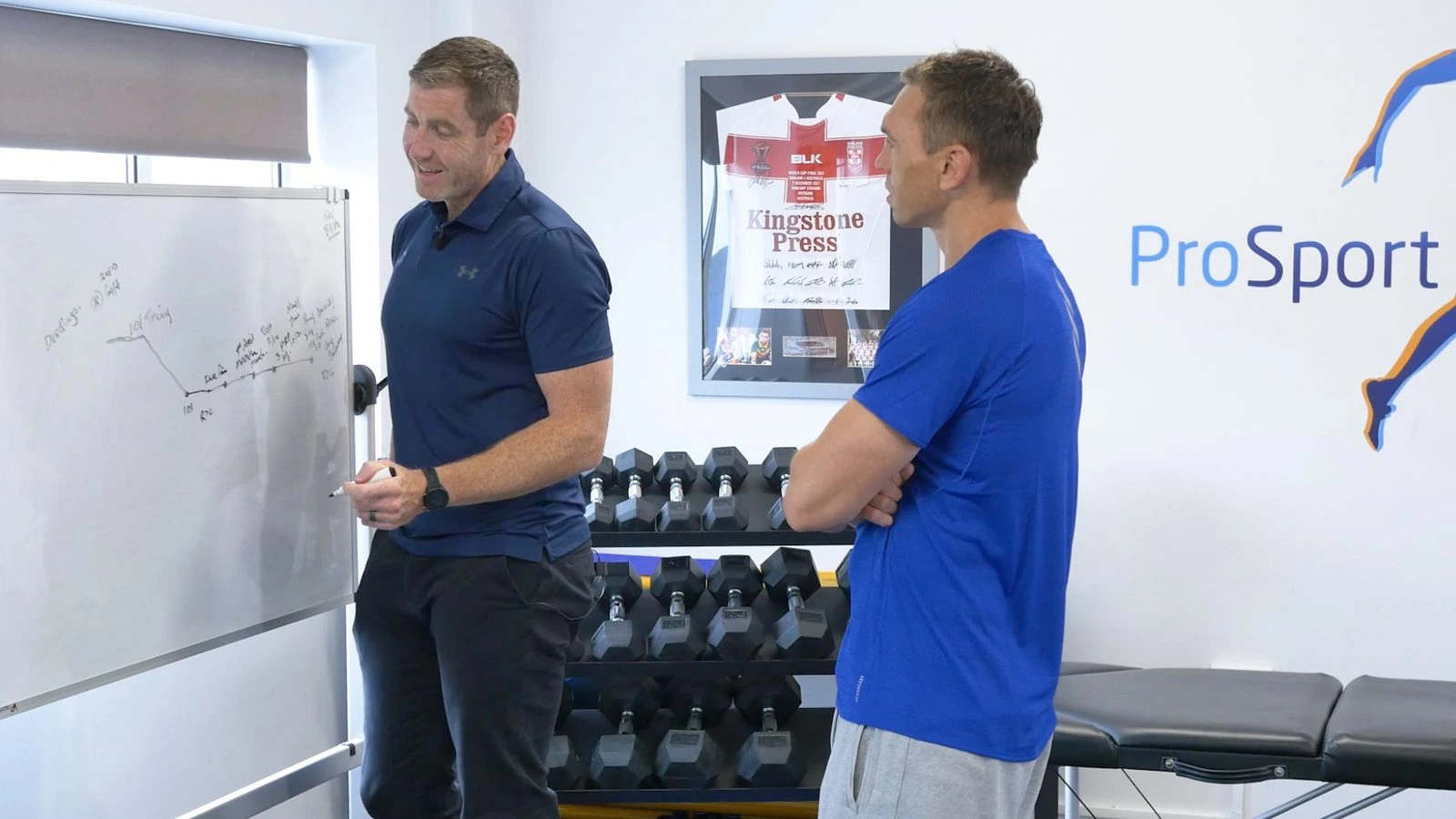
Sitting there with a pen and a napkin, I mapped out what happened when an athlete got injured.
The athlete and the coach bought into the plan and the timeline. The athlete felt progress early. We worked towards milestones, so we knew whether they were on track or off track.
When the pain eased, we still had a job to do. They needed to get back to performance feeling confident, moving with ‘thoughtless, fearless movement’.
Then I mapped what I was doing with my private patients underneath it.
I was going through the assessment and straight to hands on.
Doing all the heavy lifting on the couch. Then rushing through two or three exercises in the last five minutes before the next patient.
I was skipping past mapping out the full treatment plan and hence, the 'buy-in'.
The plan might have made sense in my head, but I hadn’t made the whole journey clear to the patient.
And I had no clear way of knowing whether they were on track or off track.
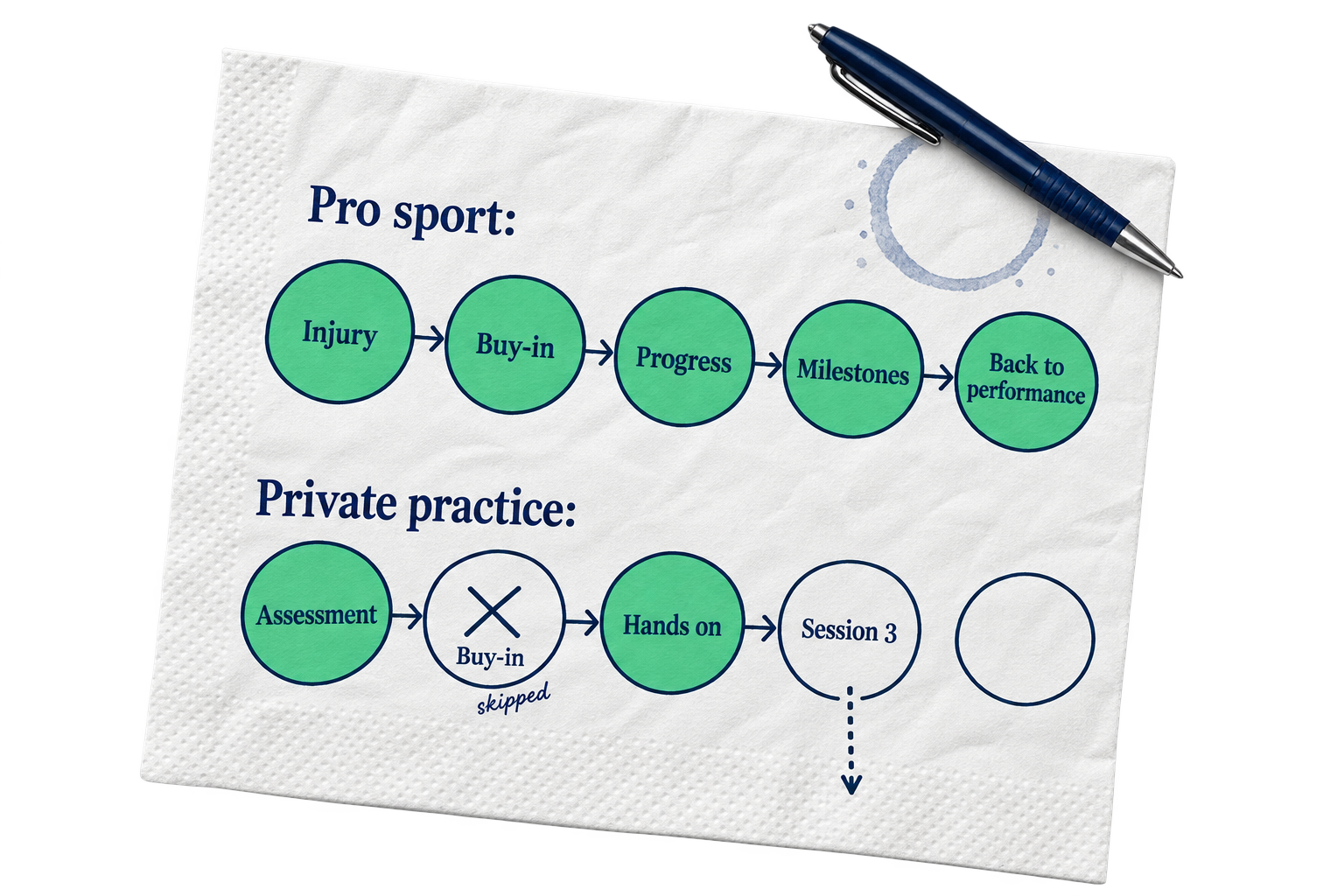
The same hands as pro sport. The same rehab knowledge. But I was leaving out the stages that helped an athlete understand the plan and keep progressing.
That was the gap I’d seen in the numbers.
Then I brought that structure into my private practice.
I started making the plan and the timeline clear from the initial assessment. Patients could see where we were going and why each stage mattered.
I was doing less hands-on in the first session, and patients came back happier. They understood the journey.
Patients started finishing their treatment plans. They referred their families, their colleagues and their running clubs. The diary filled.
That approach became the ‘Go-To’ Clinic Patient Storyboard™. The clinical system that everything else in the programme is built around.
I’d been trying to grow the clinic by shouting louder outside the treatment room. The change I needed started inside it.
Looking back, I could see why I’d missed it.
My clinical training had taught me to assess and treat. In pro sport, the structure around the athlete helped them follow through.
In private practice, I had to build that structure myself.
And if you’re struggling with this too, it’s not your fault.
IT IS NOT YOUR FAULT
Nobody taught you how to keep a patient past session three. Not your degree. Not one CPD course.
Your degree taught you to assess and treat. CPD gave you more techniques.
But building a treatment journey that patients understand, buy into and follow through on? That was left for you to figure out.
And somehow, you’re supposed to figure it out while running the entire business yourself.
One person. Four jobs. All at once.
That was my reality. Between treating patients, I was also answering enquiries, chasing cancellations, trying to market the clinic and worrying about the numbers.
Getting patients to follow through helped fill my diary. But it didn’t take those other jobs off my plate.
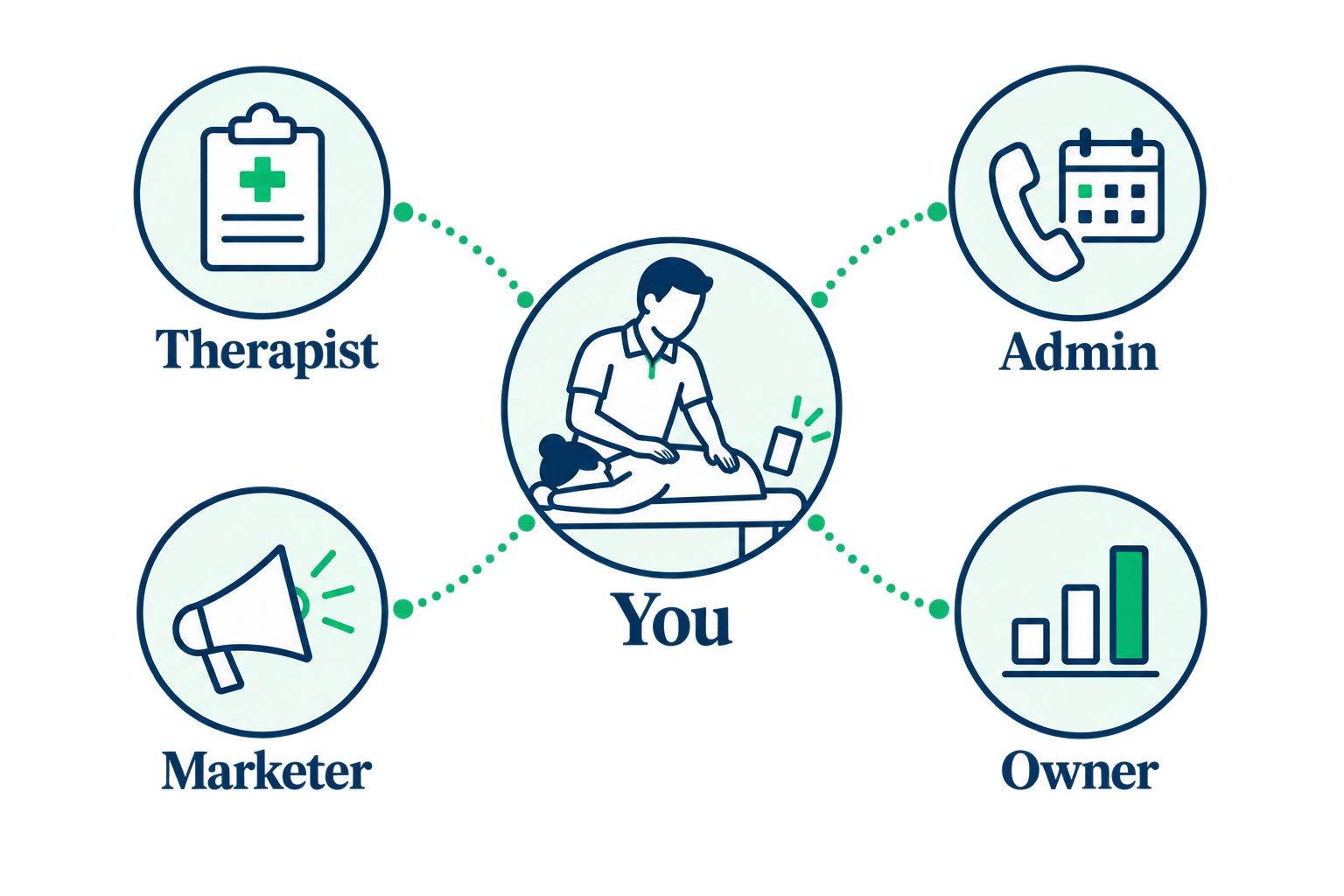
TherapistMake sense of the patient, design the plan, deliver the care.
AdminAnswer the enquiry, take the payment, chase the cancellation.
MarketerKeep enough of the right patients coming through the door.
OwnerWatch the numbers and decide what to fix next.
If you’re running your clinic alone, chances are, you’ll also recognise that constant switching and chaos.
Every hour spent treating is an hour you can’t spend on the other three jobs.
So you finish the day with plenty done, but still feeling behind.
That’s why the clinical system is only the beginning.
You also need the business systems around it, so you know what to focus on, what you can hand over and when you can afford to hire.
I had to bring those two pieces together in my own clinic. The clinical system that helped patients follow through, and the business systems that helped me grow.
That became the foundation of what I now teach other clinic owners.
Because I wanted them to have the structure I’d needed when I was trying to get to forty patients a week myself.
Introducing the Go-To Clinic Mentorship
The programme I REALLY needed when I opened my own clinic.
A step-by-step programme that brings the clinical and business systems together, so you can build a full, profitable diary and get ready to hire your first therapist.
We start where the change started for me: inside the treatment room.
This is not just a marketing programme. Ads come last, on purpose.
First, you put the clinical system in place to help patients understand their plan and keep progressing. Then you build the business systems around it. With those foundations in place, you’re ready to turn up demand.
Remember, EVERY 'Go-To' Clinic's growth starts and finishes inside the treatment room.
And you'll finish it still treating forty patients a week. Ready to hire your first therapist with the proper systems in place.
Your journey continues across two programmes. The Clinic Mentorship gets you to a full, profitable diary that ensures you hire the right person and they hit the ground running. The Go-To Clinic Mastermind is where you reproduce that standard through a team and build a self-managing clinic that gives you more free time.
Buy-In
You came into this profession to help people. Not to feel awkward selling, or to read from a sales script.
So here's the good news. You'll never have to.
There's one stage in every patient's journey that decides whether they come back.
It's not the treatment. It's not the exercises. It's the moment the patient buys into the plan and the timeline.
Buy-in.
The awkward truth is most physios skip it. Not because they're lazy. Because it feels like selling.
You get to the end of the subjective, you can feel the clock, and you go straight to hands on.
Because that's the bit you're confident in.
That's exactly what I did in my own clinic.
So the thing you hate isn't selling. It's the one stage you're missing.
Buy-in is the only stage that isn't selling. It's the patient understanding where you're taking them and why.
When they're certain about the problem, certain about the plan, and certain about you, they say yes to the right plan.
That yes is the sale. Nothing gets awkward and turns salesy at the desk. No scripts. No packages pushed at someone in pain.
They come back because the next step in the next session is obvious. Packages take care of themselves.
The sale happens in the initial assessment. Not at the desk. We call it the Ethical Sales System.
The initial assessment, done properly, is the sales system. The plan the patient believes in is the package. The rebook, the completion and the referral all follow from that.
This is the bit 99% of therapists are never taught.
Which is why a business course can't fix it. A marketer can't teach a clinical stage. And "just sell harder" makes it worse.
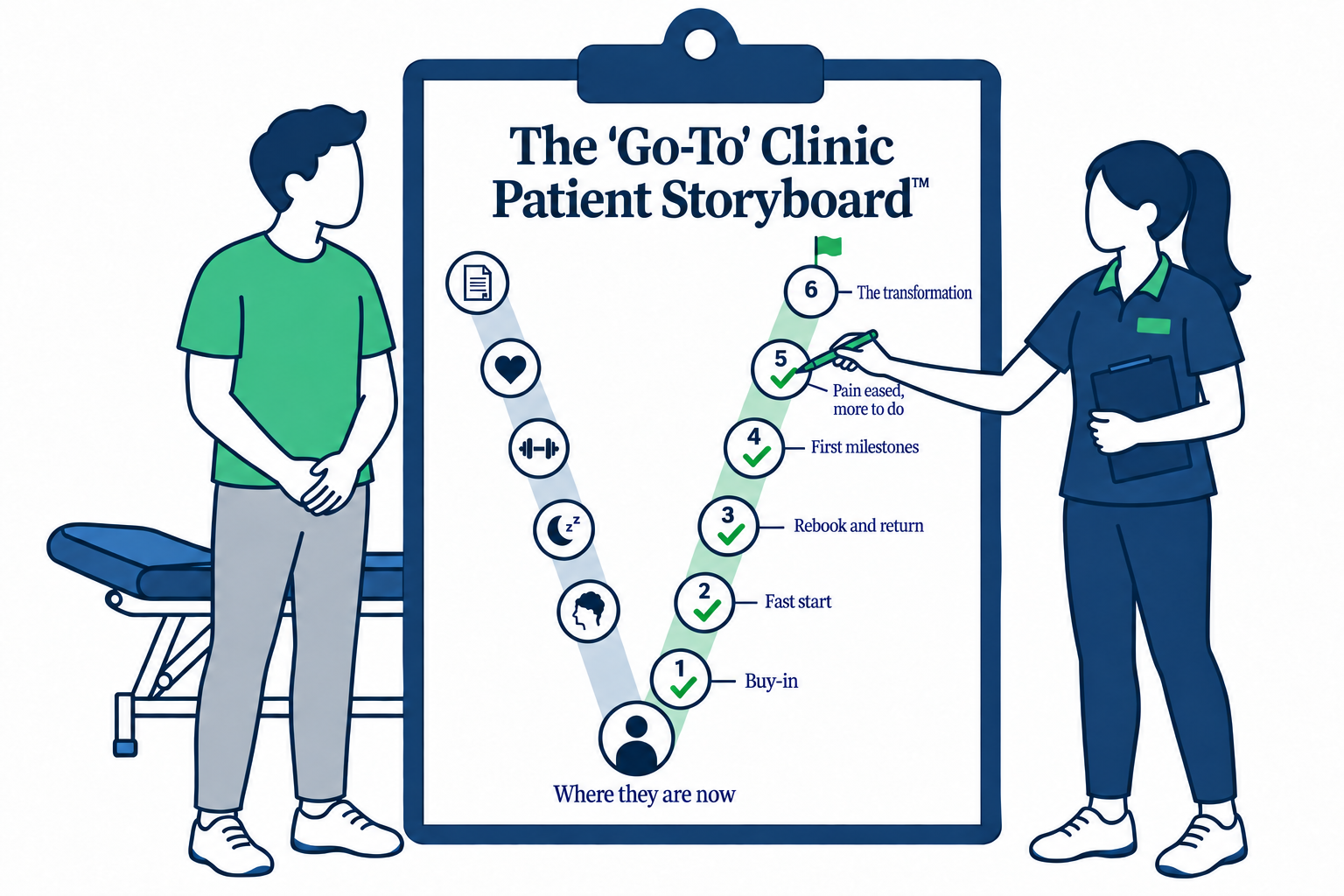
Six stages every patient goes through. On one page.
I took the pro sport approach and built it for private practice.
Buy-in
Fast start
Rebook and return
First milestones
Pain eased, more to do
The transformation
We map those six stages for every patient on one page. We call it the 'Go-To' Clinic Patient Storyboard™. It's how the patient sees where they're going, and how you see if they're on track.
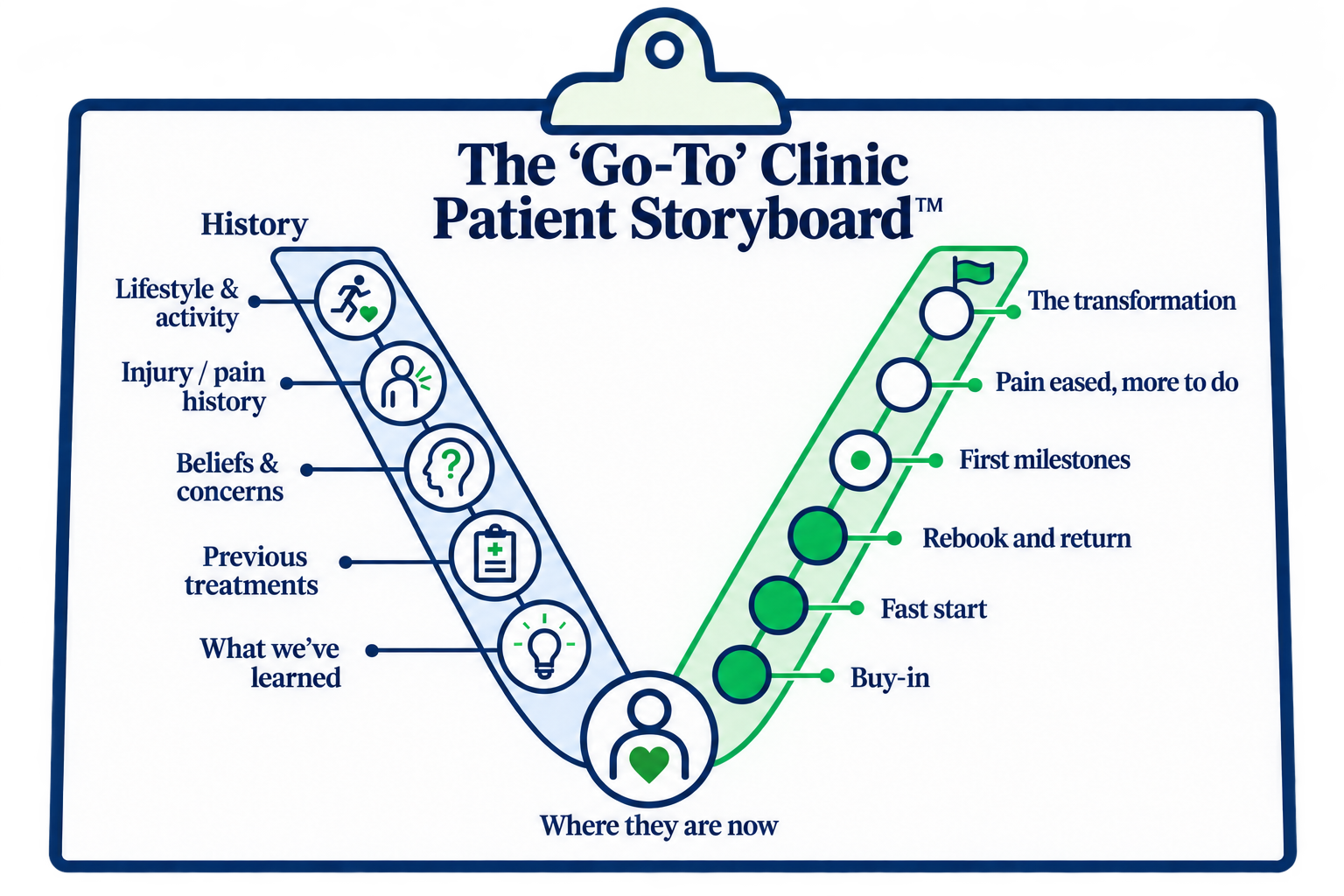
Once I put that in the room, EVERYTHING CHANGED. Reviews. Referrals. A full diary. A first hire. Then a clinic in a building I'd drawn on a vision document years before.
You're a brilliant physio. And an accidental business owner.
Here's the second gap.
You don't know your numbers, and you're a bit scared of what they'd show. You've never built a proper budget. You don't know what rent should be as a share of revenue, or what a therapist needs to bring in before you can afford one.
So even when the diary fills, you're flying blind. And you can't hire on a guess. That feeling of uncertainty returns.
That's why this programme gives you both. The clinical system that fills the diary. And the business knowledge to put the systems in properly underneath it.
The path
Clinical system first. Business systems second. Fix the leaks. Then turn up the demand.
- Build the clinical system.
 Therapist hat
Install the Ethical Sales System on your own patients. The 'Go-To' Clinic Patient Storyboard™, the initial assessment done properly, buy-in, fast start, the follow-up structure. Prove it on your first ten patients. Watch your rebook and your completion rate move first. Then have a clear plan for every session and watch in satisfaction as your patient finishes what they started. Notice the increase in referrals and reviews.
- Gain the business knowledge and put the systems in properly.
 Owner hat
Dashboards, a real profit and loss, a budget, the seven numbers that run a clinic. You stop running it on feel. You know exactly when you can afford your first hire.
- Fix the leaks.
 Admin hat
Every enquiry captured, answered fast, and followed up. Every cancellation treated as a signal, not a gap. Packages of care set up, so the plan the patient already said yes to is priced and in the diary.
- Turn up the demand. Become the Go-To clinic in your area.
 Marketer hat
Now, and only now, marketing. Built on a transformation you already deliver. Once your patients finish and refer, you can afford to pay more than anyone else in your area to get a new patient through the door, and still profit.
- Grow properly and sustainably.
 Hand the first hat over
Forty a week. A waitlist. Green numbers. A written standard for how you do the Storyboard, the assessment, the follow-up and the front desk. That's the day you hire, and you hand your first therapist a system, not a pile of guesses.
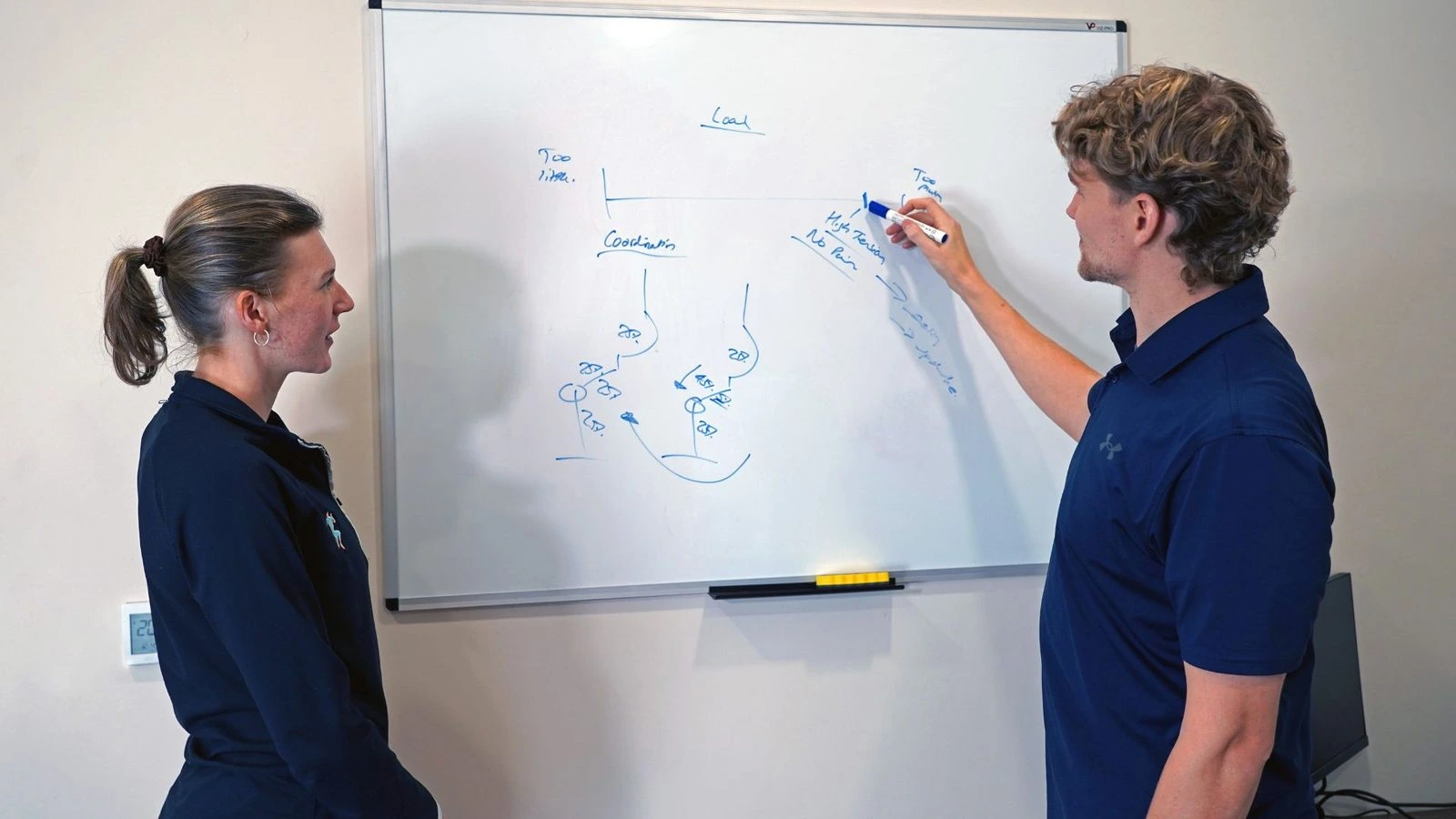
One of our therapists mapping a patient's full treatment plan. The standard, handed over and in use.
Built properly means your first hire hits the ground running fast without any of the problems every other clinic owner runs into with their first hire.
Here's the bit nobody warns you about.
The day you hire is the day you find out what your clinic was actually built on.
I found out the hard way. My very first therapist hire. I had high hopes he'd take some of the load off me. He nodded. He took notes. I genuinely believed he 'got it'.
Within a few weeks that full diary was emptying FAST.
His patients weren't rebooking. And when I looked for the reason, it was staring back at me. The only system in the building was me. My reputation. My way of doing the assessment. My way of getting a patient to say yes to a plan. None of it was written down. None of it could be handed over.
So I was covering his wage out of my own hours. Back in the room, treating more, not less. Lying awake wondering what the local runners were saying about my standards.
That's a clinic built on you. Fine the day they start. Emptying a few weeks later.
Built properly is different.
You prove the system on your own patients first. Your first ten Storyboards. Your rebook rate over 90%. Your package conversion moving. Then you turn it into a standard your first hire gets trained on, in the room, on real patients. Not a folder of notes.
Your first hire doesn't get your memory. They get the system that already works in your clinic. That's how they hit the ground running.
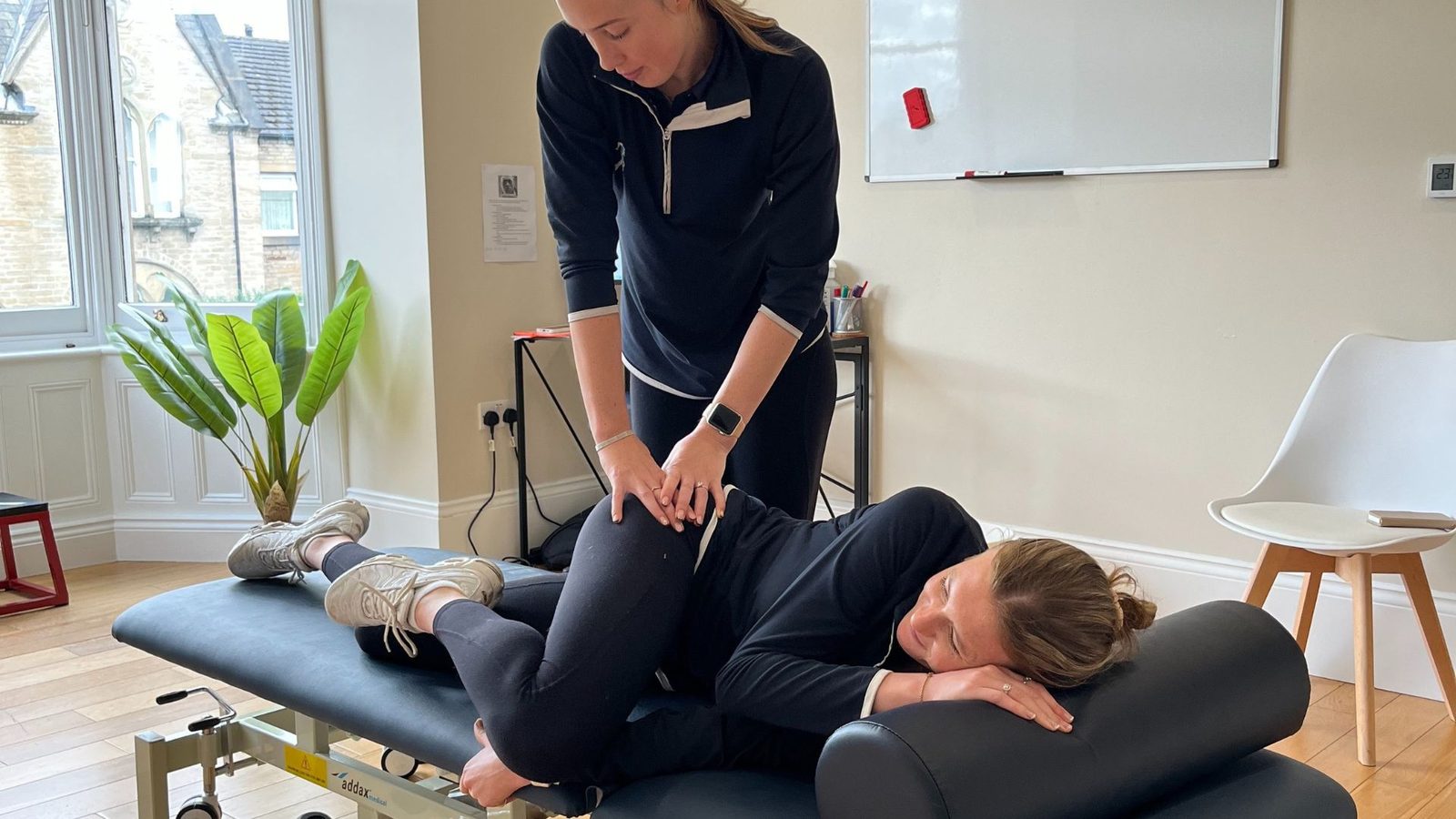
And the marketing? You don't switch it off while you build. One useful email a week to your email list. Three strategic growth conversations a week, a past patient, a referral partner, an ideal patient. One block in the diary you protect like a patient appointment. Enough to keep the tap on while you fix the bucket.
The clinical system goes in over weeks. The £100k clinic is what it turns into over the year.
Why this is different
Why this goes beyond another clinic growth programme.
If the gaps in your diary come from patients dropping off, bringing in more enquiries only addresses part of the problem.
The Go-To Clinic Mentorship brings the clinical and business systems together, starting inside your treatment room.
Here’s how that differs from programmes centred on marketing and business coaching...
| What matters to you | The Go-To Clinic Mentorship | Other growth programmes |
|---|---|---|
| Where growth starts | The treatment room. Help patients understand their plan, progress and follow through. | Often starts with marketing, enquiries and new-patient acquisition. |
| Filling the diary | Work on patient follow-through, referrals and demand, in that order. | An acquisition-led approach focuses primarily on enquiries and bookings. |
| Your clinical system | Install the Patient Storyboard™, initial assessment and follow-up structure. | Check whether a clinical delivery system is included alongside the business advice. |
| Feeling comfortable selling | Build buy-in through a clear treatment plan and timeline. | Sales coaching may focus on enquiry conversion. Check how it applies inside an assessment. |
| Your business foundations | Build your budget, understand your numbers and know when you can afford to hire. | Business support varies. Check whether you get help applying the numbers to your own clinic. |
| Your first hire | Develop a clinical standard you can hand over and train someone to deliver. | Recruitment or demand-generation advice may leave clinical training and delivery to you. |
You need patients coming in, patients progressing and a business that works around both. That’s what we bring together in this one of kind program.
Owners JUST LIKE YOU who BUILT £100K+ CLINICS
Cian was seeing 40 to 50 a week on his own and burning out. Now two clinicians, both at 80%, and he's hiring again.
These clinicians and owners ran the Go-To Clinical Operating System™ on their own patients first. Now the whole clinic programme is built around it.
I would've been seeing about 40, 50 a week by myself. No admin team, just me. I was getting a little bit burnt out.Cian O'Toole, clinic owner, Ireland. Joined as a solo clinic owner. Now sees about 30 a week. His first physio sees 40 to 45. Both at 80% utilisation, a part-time admin, and hiring again.
Toni StantonSports Therapist
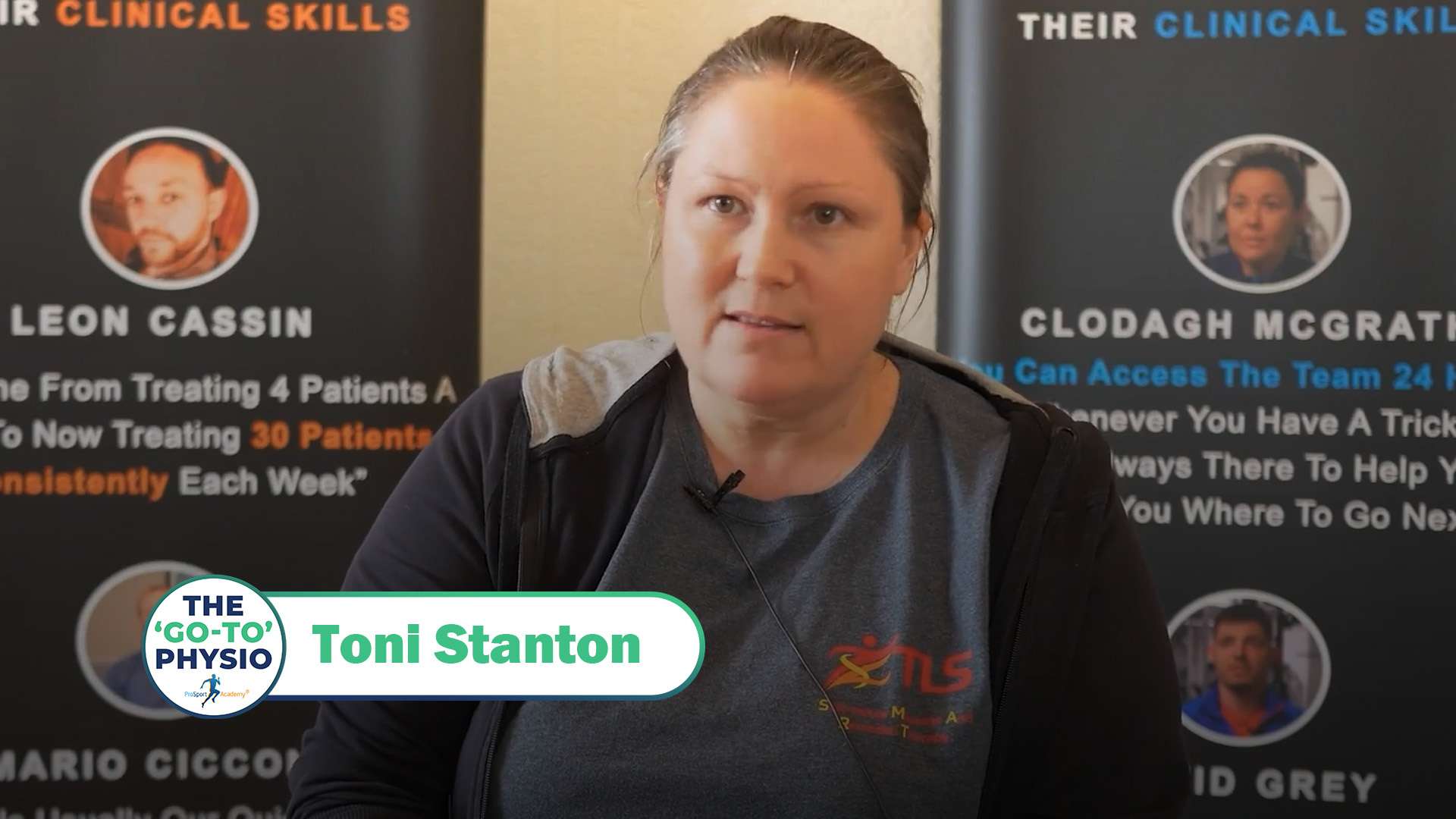
Before
Seeing 10–15 patients per week. Technique-hopping without a plan. Burned out, second-guessing everything.
After installing the system
Doubled weekly patient numbers within the first month. Created a 5-week waitlist through word of mouth alone. Patients progressed faster and stuck with the full plan.
I was seeing 10 to 15 patients a week. Within a month, I was at 20. Now I’m consistently hitting 30 — and my waitlist is about 5 weeks.
Greg SternPhysiotherapist, Canada
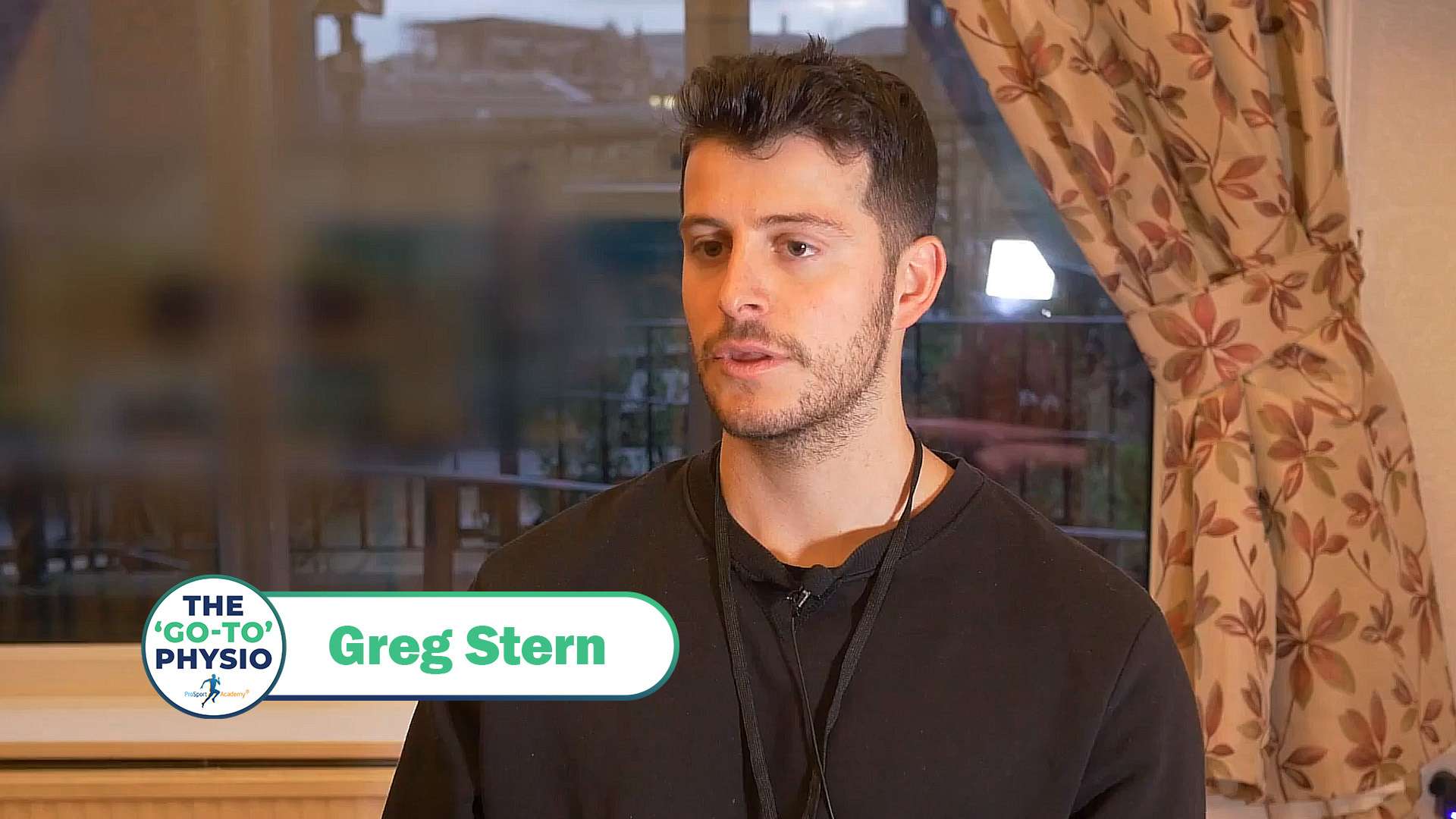
Before
10–15 patients per week. Jumped between techniques without structure. Results were hit and miss.
After installing the system
Doubled caseload to 25–30 patients per week. Patients stuck with treatment longer and saw better outcomes. Became the therapist other clinicians in the practice refer complex cases to.
People are more motivated. Once they see the results, they want to keep going.
Chloe WilsonSports Therapist
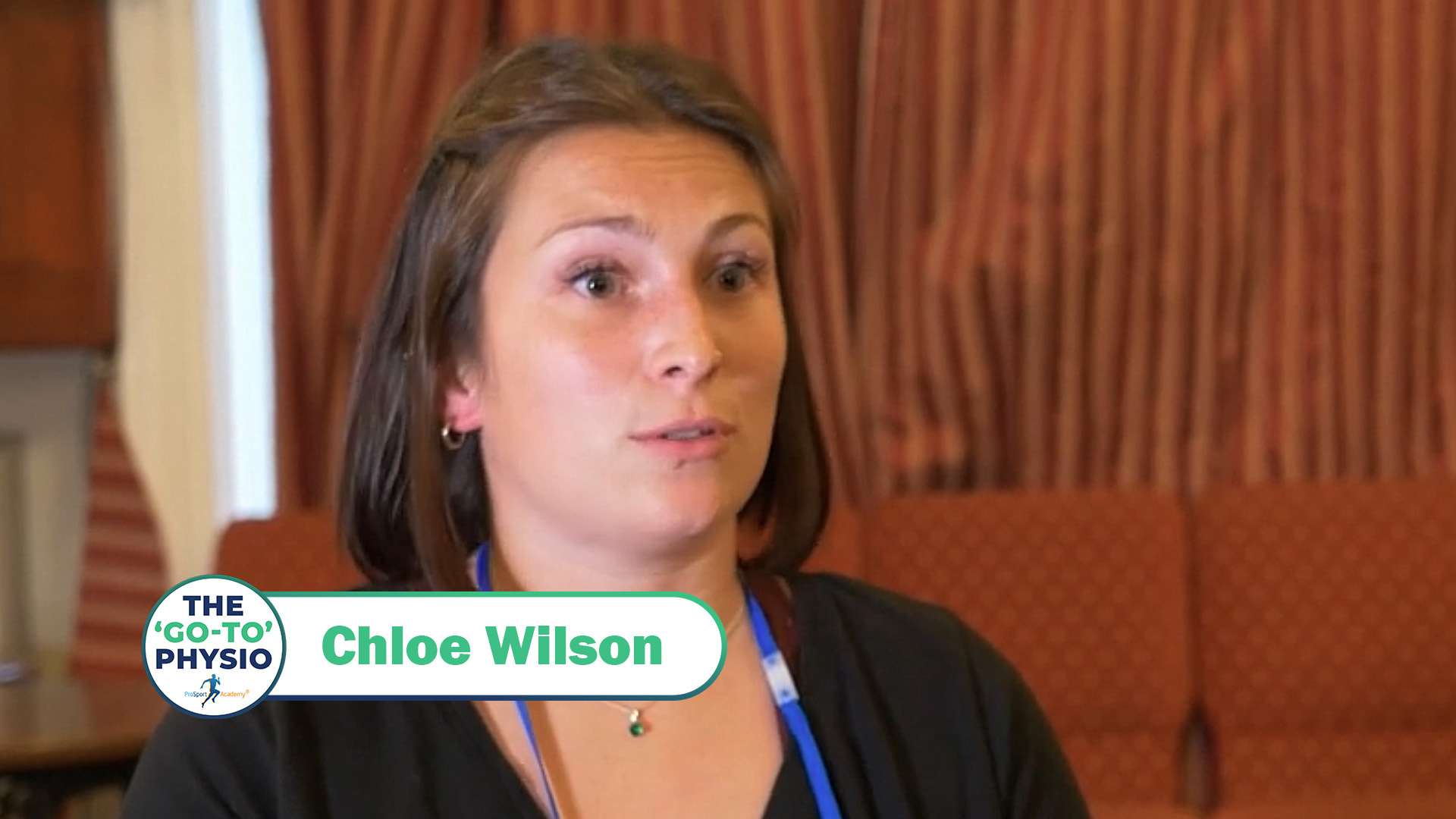
Before
Running a solo clinic while juggling a 9–5. No structure, no confidence.
After installing the system
Went full-time in her own clinic with full confidence. Doubled patient volume without burnout. Built a predictable system that gave her clarity and control.
I just feel so much more chilled out. I’m full time in my own clinic now — and that never would’ve happened without this.
Laura FranklinChartered Physiotherapist
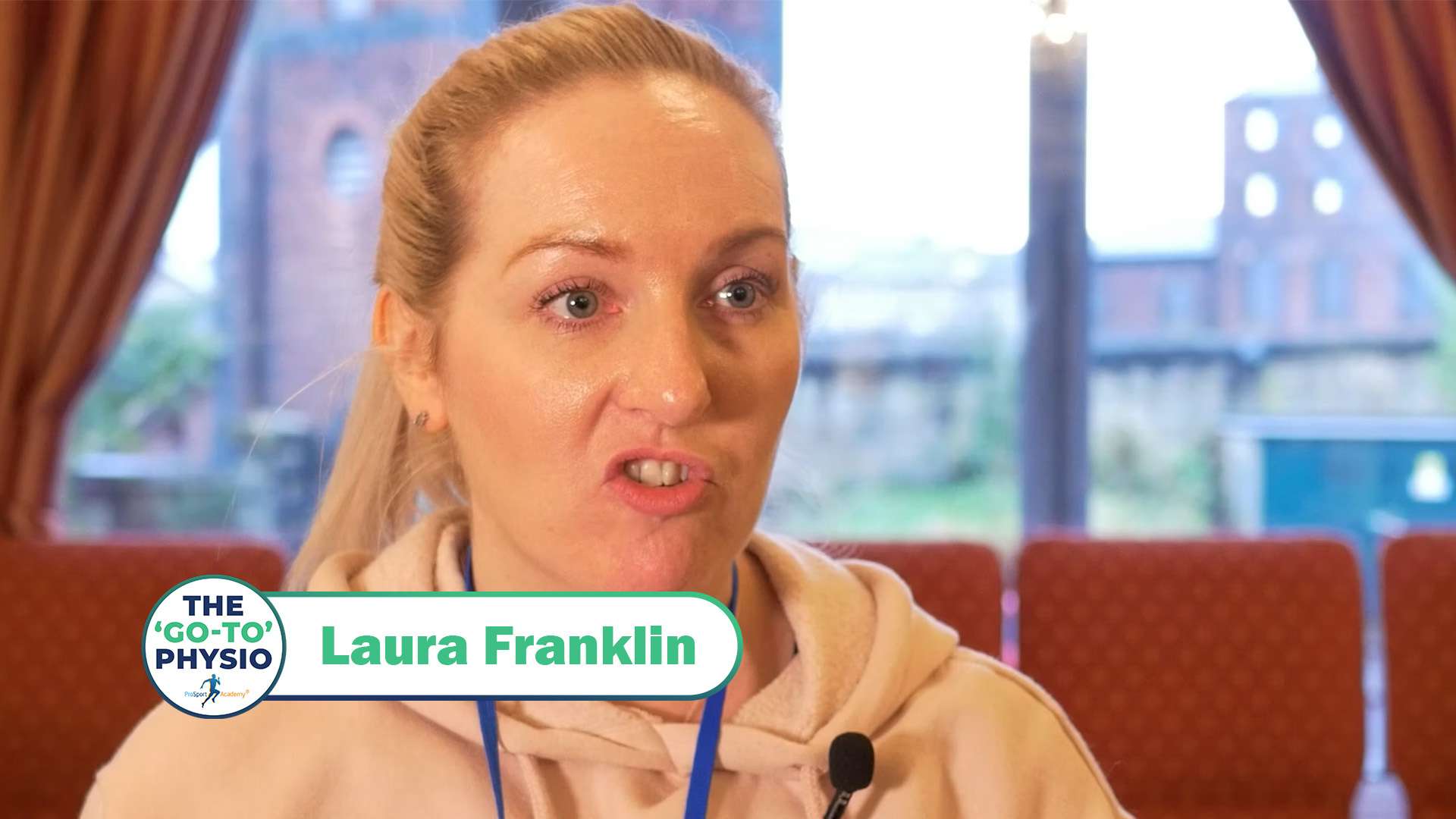
Before
Over-delivering, undercharging, second-guessing every session. Patients unsure of the plan.
After installing the system
Package conversion rate rose to over 98%. Built complete treatment plans in minutes. Reclaimed control of her time and income.
We’re very clear from the start. This is how many sessions we think it’s going to be. And our package sell rate is 98%.
Dan TurnellClinic owner, Manchester
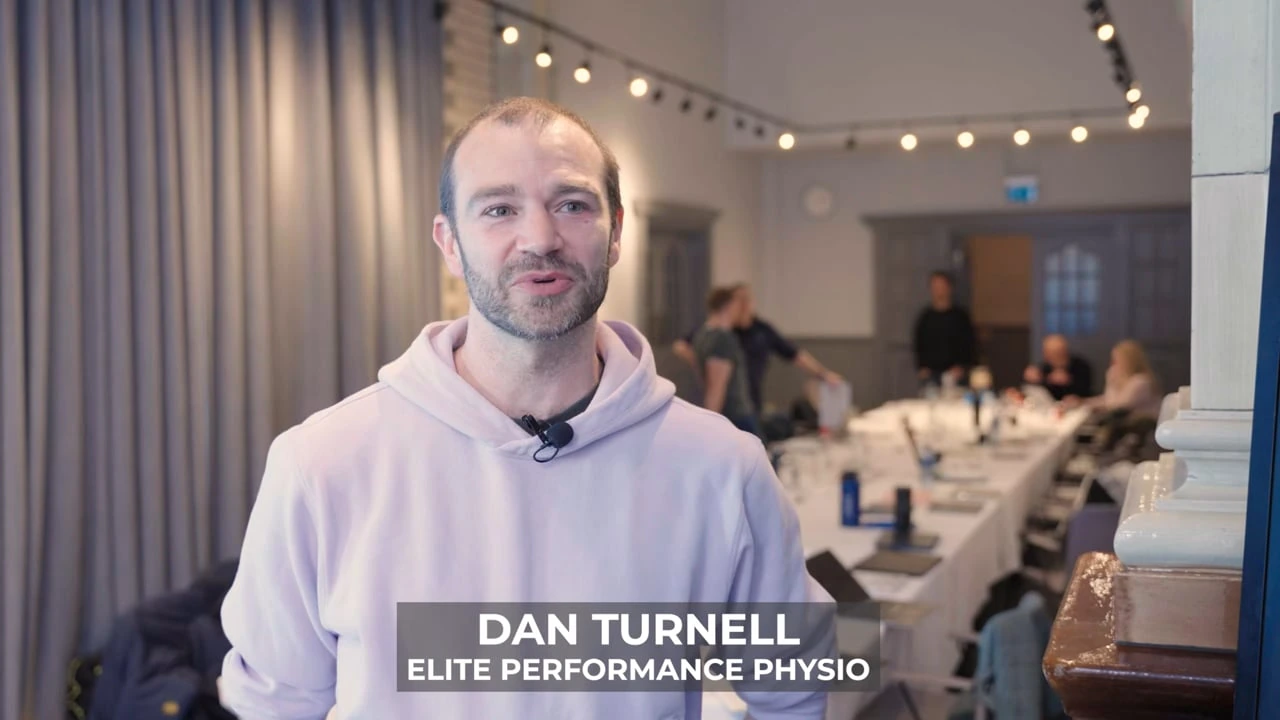
Before
65 to 70 appointments a week, all seen by Dan.
After installing the system
Now 90 to 100 a week across the clinic with Dan seeing fewer. Training for a triathlon.
I improved my rebook rate from 78 to 90%, installed packages of care and my PVA went from 4 to 6 ethically. Then when I hired, my therapist hit the ground running fast. I am so glad I did it in the correct order.
Ben SuttonChartered Physiotherapist, Newcastle
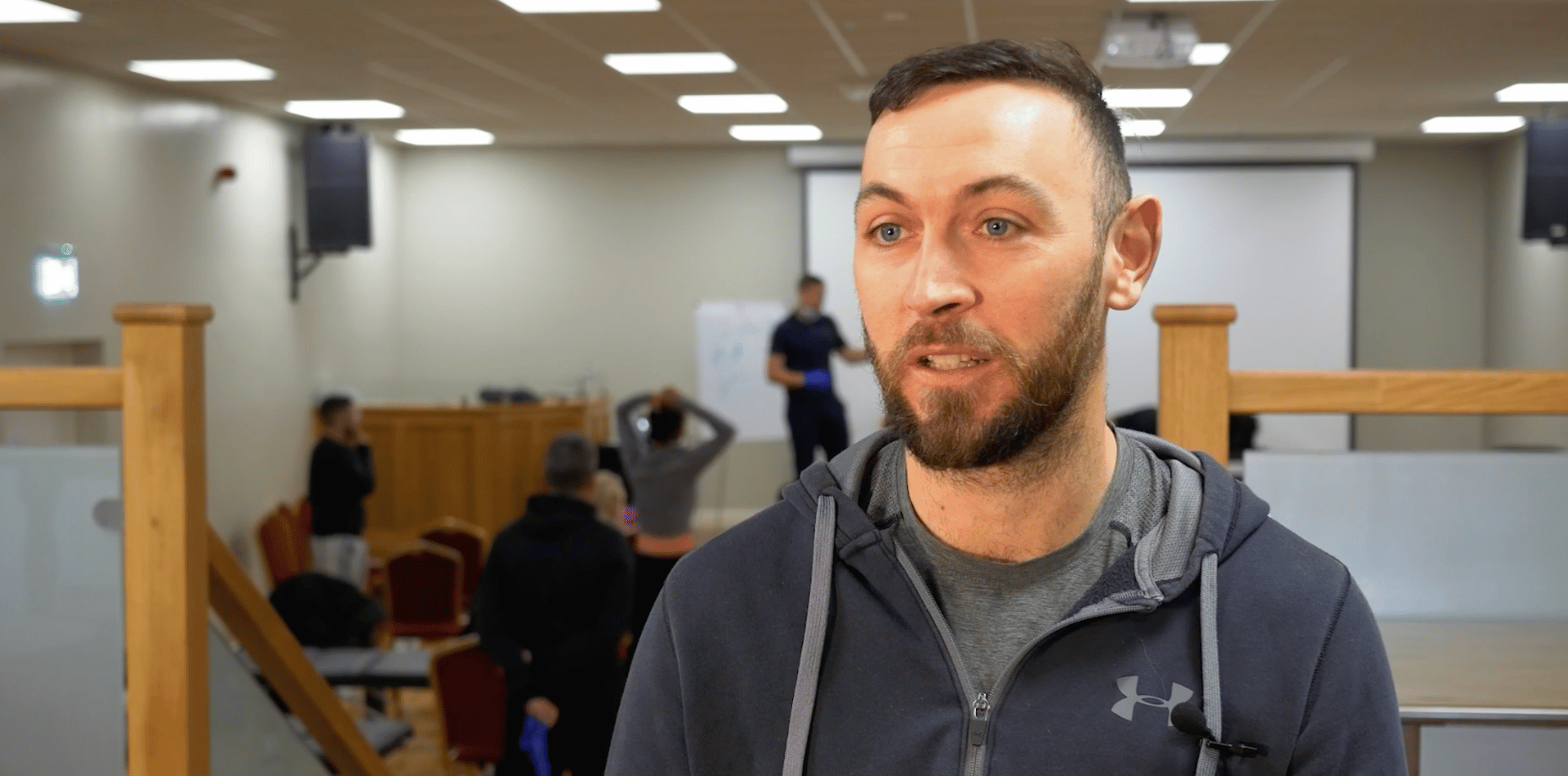
Before
Overwhelmed, over-delivering, lost the joy in the job. Every day felt draining.
After installing the system
Bigger caseload with more clarity and less stress. Patients leave with a smile and refer others. Reconnected with the reason he got into physio. 12-hour days now feel fulfilling, not exhausting.
1,500 therapists. 50 countries. Five clinics of our own.
1,500+therapists
50+countries
5clinics we run
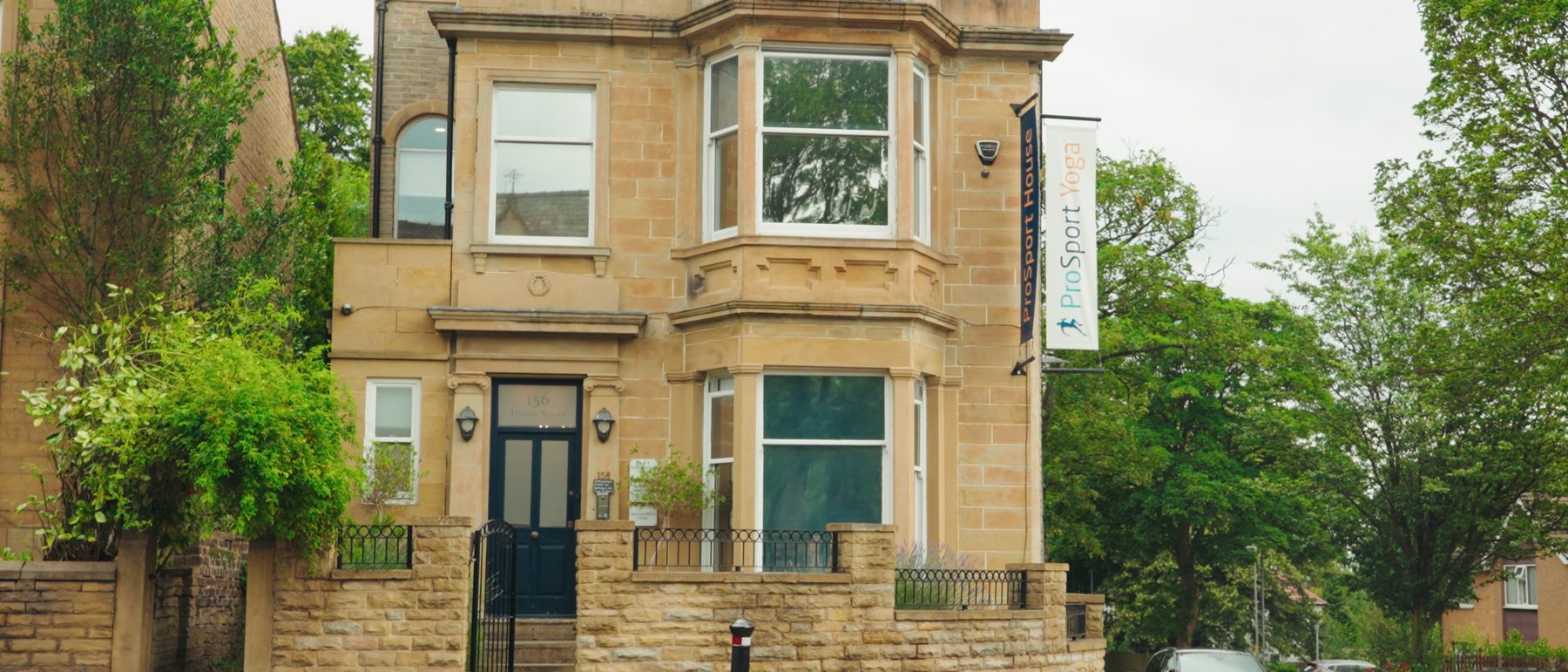
We test everything in our own five clinics first.
What you get
Everything that gets you to forty a week, and ready to hire. Powered by the Go-To Clinical Operating System™.
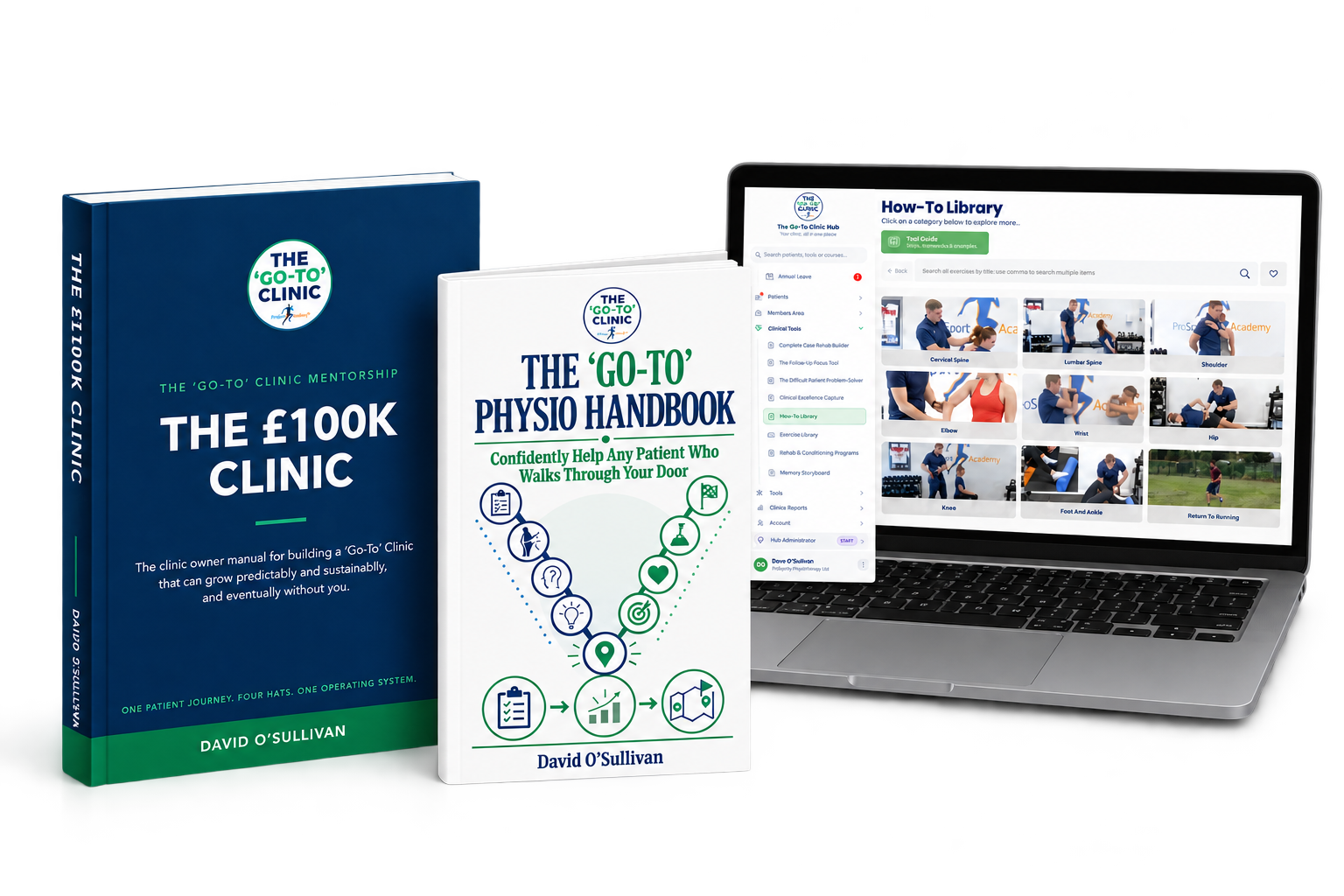
The Go-To Clinic Mentorship is built on the same clinical system that filled those diaries, and now it comes with the business half around it.
- The Ethical Sales System installed on your patients. The Patient Storyboard, Initial Assessment Mastery, the six stages, and the follow-up structure. Module by module, proven on your own caseload.
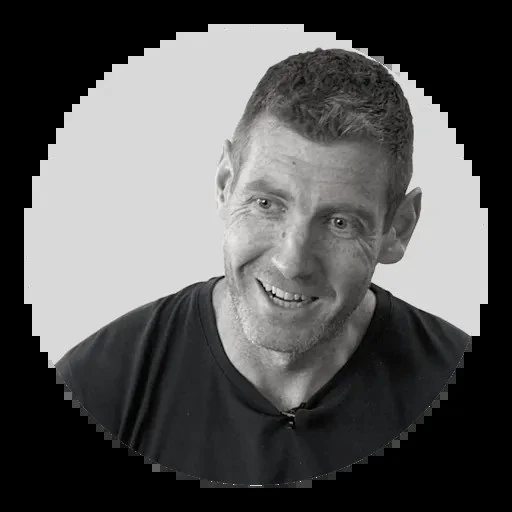 Weekly live group coaching calls, coached by me personally. Every week you bring your diary, your numbers and your biggest obstacles, and I coach you through them live. Not a recording. Me.
- The Go-To Clinic Hub. The Storyboard, the Follow Up Focus Tool, the Problem Solver, outcome protocols and the exercise library. The software you run the system through.
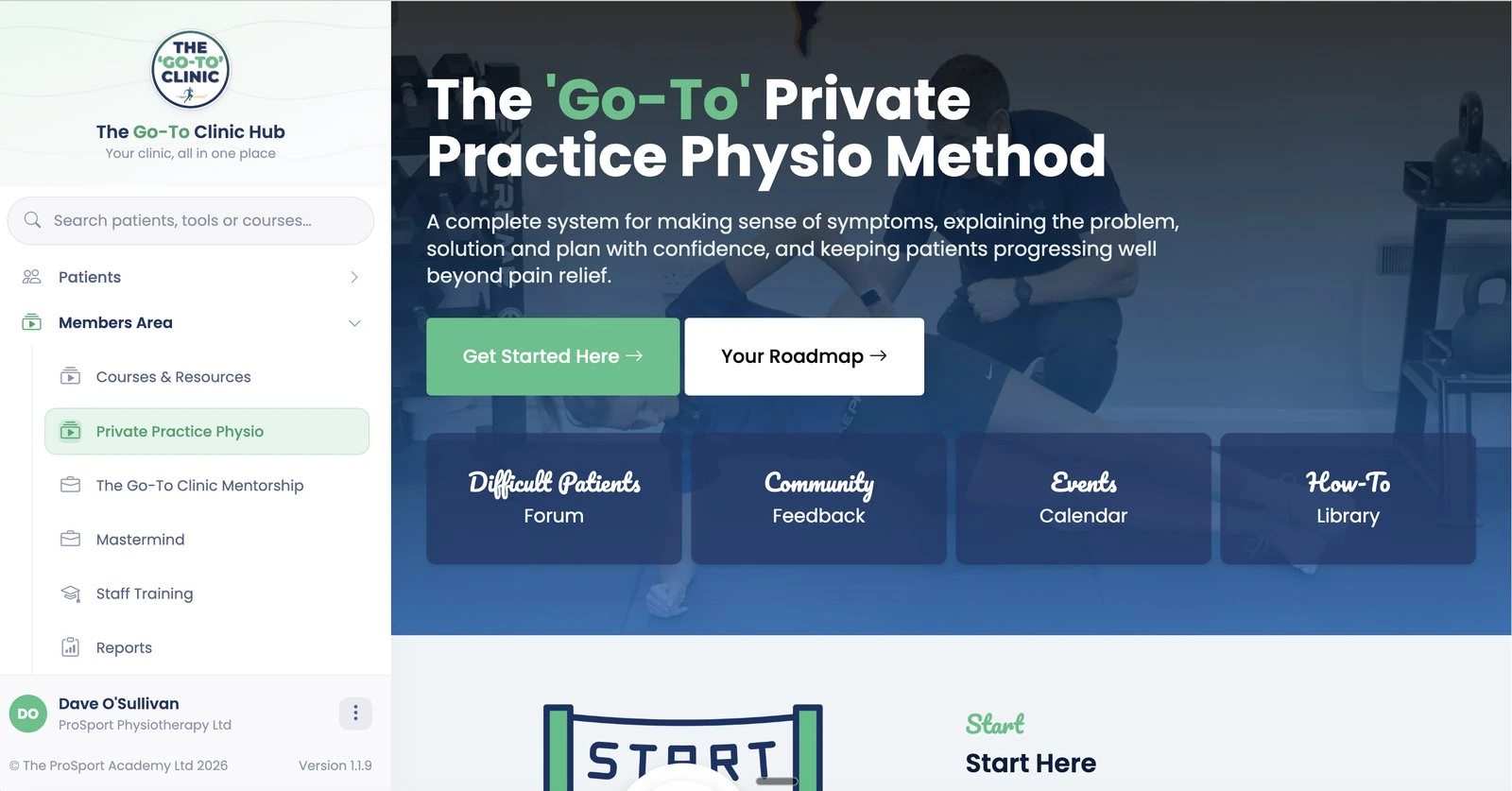
The Go-To Clinic Hub. The Mentorship, the Difficult Patients Forum and the How-To Library, in one place. - The business foundations. Your dashboards, your profit and loss, your budget, and the numbers that tell you when you're ready to hire.
- The Admin Sales System and Packages of Care. Run by you for now. Handed to your first front desk hire later.
- Live workshops and check-ins. Quarterly live workshops, a one to one game plan call, and strategic check-ins against your numbers. And the difficult patients forum, for the one you're still thinking about on the drive home.
- A solo clinic scoreboard. Rebook over 90%. Package conversion over 40%. Cancelled and did not rebook under 8%. Six or more visits per patient. Green or not green, on one page.
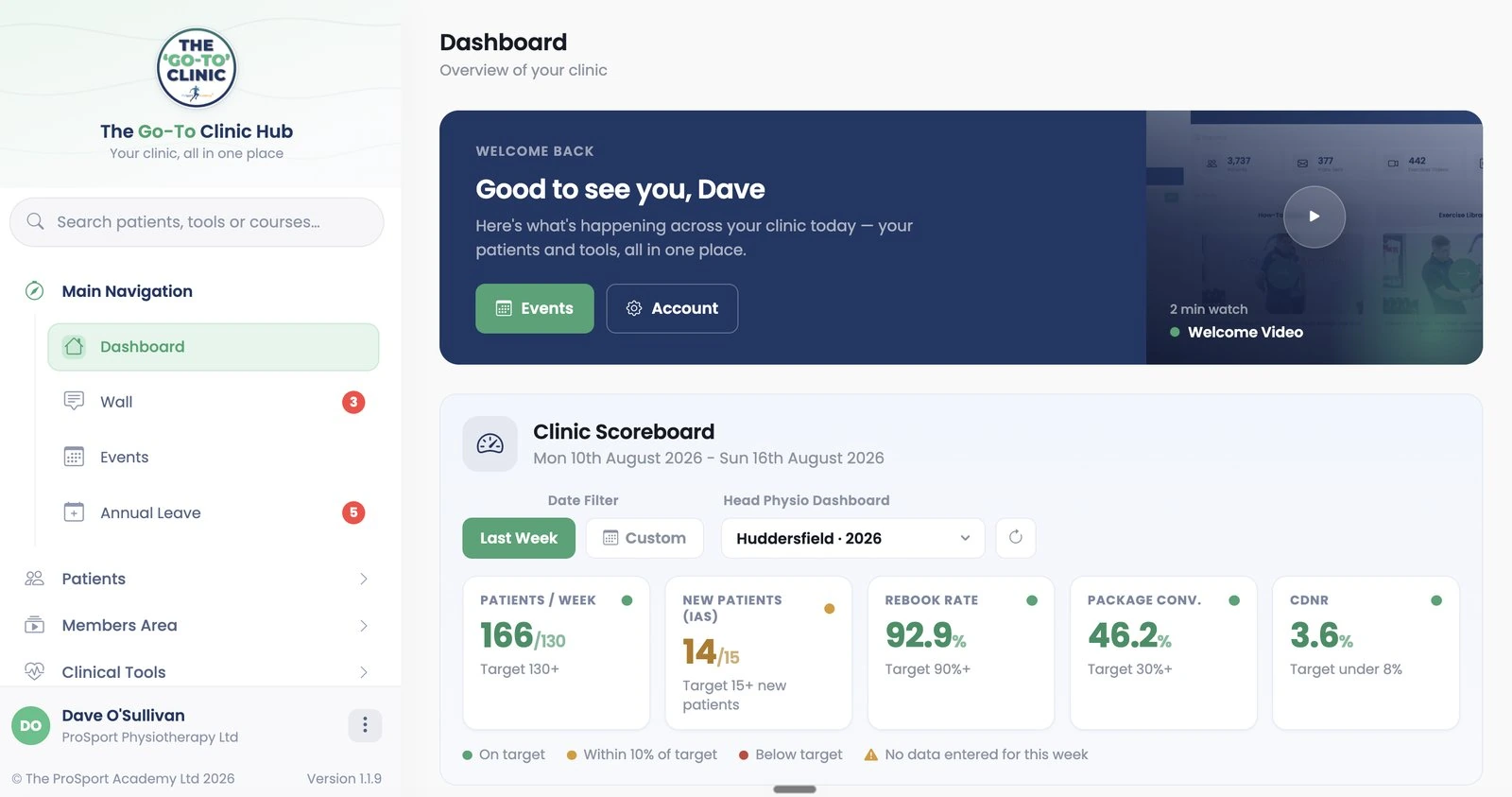
Our Huddersfield clinic's scoreboard, one week in August 2026. Rebook 92.9%. Package conversion 46.2%. CDNR 3.6%.
Bring your numbers to the demo. We'll go through your diary with you and show you exactly where the leak is.
Who this is for. And who it isn't.
This is for you if
- You're a solo physio, osteopath, chiropractor or sports therapist running your own clinic.
- You're seeing 20 to 35 a week and the diary has inconsistent gaps.
- You want to hire in the next year or two, and you want to do it properly.
- You'd rather fill the diary through patients who finish and refer than through ads.
- You're getting good clinical results, but everything is in your head, so you're afraid to hire.
- You want the systems in place that let you grow the clinic while having more free time, and do it properly the first time round.
This is not for you if
- You want a marketing programme. Ads and funnels come last here, on purpose.
- You want it fast without putting it into practice on your own patients first. The first weeks are your own Storyboards on your own patients, one gap and one fix at a time.
- You're stuck in your ways and not coachable.
- You're not willing to 'tell the truth' about your practice and track your numbers.
Who is behind this
Who am I? And why this system exists.

I'm Dave O'Sullivan, a Chartered Physiotherapist from Cork, now based in Huddersfield, West Yorkshire.
Three Rugby World Cups. Olympic athletes. Pro golfers. England Rugby. The Wallabies. And a private clinic of my own, built while I was still travelling with teams.
That same system has since helped over 1,500 therapists in 50+ countries grow their confidence, retention and reputation, from solo practices to multi-site clinics.
My clinical experience includes:
- Head Physio for England Rugby League
- Rehab Physio for England Rugby Union at the 2019 Rugby World Cup (Japan)
- Consultant Physio to the Wallabies at the 2023 Rugby World Cup (France)
- Private clinic owner in Huddersfield, UK
- MSc in Strength & Conditioning (St. Mary's, London)
- BSc (Hons) in Physiotherapy (University of Huddersfield)
- Clinician to Olympic athletes, Premier League footballers, pro superbike racers — and even touring vocalists
Eight places a month
Questions owners ask.
- I've done business courses before. Nothing changed.
- Those courses gave you knowledge. A dashboard that tells you what happened, from your memory, after the fact. Nothing changed in the treatment room, so nothing changed. This starts in the room, then builds the business systems on top of a diary that's full and stays full.
- I hate selling. Is there a script?
- No script. Buy-in is a clinical stage, not a pitch. When the patient is certain about the problem, the plan and you, they say yes to the right plan. Nothing gets pushed at the desk.
- How much time does it take each week?
- Two to three hours a week on the training. The rest happens inside appointments already in the diary. You don't add patients to practise on. Your next initial assessment is the practice.
- I'm not a physio.
- The system was built in physiotherapy. It works for any manual therapist in private practice. Osteopaths, chiropractors, sports therapists.
- What if it doesn't work for me?
- You'll know on your first ten patients, not at the end of the year. Rebook and completion are the first numbers to move. You bring them to the weekly call and we look at them with you. If they're not moving, we find the gap in the room and fix that before you build anything on top of it.
- What happens when I hit 40 a week?
- You can stay there for a bit and make your business even more profitable and enjoyable, or you can hire. With a proven standard ready to hand over. That's the day the Mentorship ends and the Mastermind begins.
- What happened to the Go-To Therapist Mentorship?
- It hasn't gone anywhere. It's grown up. The clinical system that over 1,500 therapists installed through it is now the first half of the Go-To Clinic Mentorship, with the business systems built around it. If you were a member, everything you learned still stands. This is the next step.
- I just want my clinicians trained. I'm not ready for coaching.
- Then Train My Clinician is the option. Your therapists get the clinical system. You don't get the coaching. When you're ready to build the business around it, the Go-To Clinic Mastermind is where you come.
- Why do you cap places?
- Because we work with you on your own numbers. We take eight new members a month so we can do that properly.
Before you spend a pound
You'll see it working on your first ten patients. Not at the end of the year.
The first thing you install is the Ethical Sales System, on your own caseload. Your rebook and your completion rate are the first numbers to move, and you'll see them move on your first ten patients.
And before any of that, bring your numbers to the demo. We'll show you the leak before you spend a pound.
Eight a month
8
Eight places a month. Because we work on your numbers with you.
We go through your diary with you on the calls. That doesn't work with fifty people.
How many more patients walk out at session three before you build the thing that keeps them?
You've tried more hours. You've tried another course. The diary still has gaps.
You don't need more patients. You need the ones you've got to finish what they started. And you need to know your numbers well enough to hire when they do.
Book a demo. Bring your numbers. We'll show you the leak, and exactly how to close it ethically.
Eight places a month
P.S.Or you can keep collecting courses and keep working harder than you need to. Bring the diary to the demo instead. One call. Eight places a month.